
HOW DEAD RECKONING IMPROVES GPS TRACKING ACCURACY?
5 min read
26/05/2026
11/08/26

Laura Kondratienė
Chief of BASE operational marketing group
In modern fleet operations, it is crucial to know where vehicles are at all times. Yet tunnels, underground parking, urban canyons, and signal jamming continue to disrupt GNSS-based tracking every day. This is where dead reckoning can help – not as a replacement for GPS, but as a critical extension of it.

HOW DOES DEAD RECKONING WORK?
By using gyroscope and accelerometer data, Teltonika’s FTC927 and FTC887 trackers with dead reckoning can calculate accurate location data even when vehicles enter blind spots. This functionality is developed and continuously improved by a dedicated R&D team responsible for both hardware and embedded systems, ensuring seamless firmware integration with the devices. Before reaching clients, every device undergoes rigorous validation by the testing department – a mandatory quality gate. As a result, fleet managers can rely on continuous and accurate tracking, with no broken tracks or missing mileage, even in the most challenging conditions.
ADDRESSING THE SCEPTICISM WITH PROOF
Tracking without a GPS signal might sound too good to be true. To showcase the capabilities of this technology during Telematics Summit Europe 2025, we organised a dead reckoning taxi, where event participants could experience tracking accuracy first-hand.
“Our focus was less on theory and more on real-world validation. The most critical task was the calibration and alignment of devices before participants arrived. Once that was done, the setup was straightforward: drive, demonstrate, and let the data speak for itself. This format left no room for controlled or staged scenarios. Customers rotated constantly – sometimes with barely enough time to unbuckle seatbelts between rides,” explains Karina Areškevičiūtė, testing engineer at Teltonika.
“The common reaction throughout the day was surprise,” Tomas Gudonis, chief of Africa’s technical support subgroup, notes. “Most clients had never seen tracking remain this accurate without a GPS signal. In one case, we were asked to stop inside an underground parking garage to confirm that the vehicle’s position remained stable in real time and that the workshop was not simply a pre-recorded simulation.”
For Eimantas M., chief of the embedded systems developer team, the most engaging moments came when participants arrived with engineers. “These discussions went deeper into system behaviour, sensor fusion, and data reliability. Challenging questions were proof of a serious interest in the dead reckoning feature,” he explains.
SOFTWARE PROVIDER PERSPECTIVE: GPSGATE’S RIDE
Alper Kaynar, sales manager at GpsGate, took a ride in our dead reckoning taxi. He was not surprised by the results, as he had been testing a device with dead reckoning in his own vehicle for several months before the event. He was among the early adopters of this technology and tested the device in Stockholm’s tunnels, where fleets can easily lose GPS tracking data.
“What surprised me most was that the GPS tracker was able to register speed changes in real time while driving through the tunnel,” says Alper.
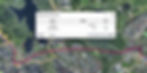
Compared to a standard GPS tracker, a device with dead reckoning functionality provided more accurate data, showing around 20% more distance travelled. This is because traditional tracking devices only connect two points with a straight line – the tunnel entrance and exit – resulting in distorted data. This discrepancy occurred over a distance of just under 4 kilometres.
“The longer the tunnel and the higher the number of trips, the more inaccurate fleet data becomes without dead reckoning support,” explains Alper.

A COMPETITIVE ADVANTAGE THAT WILL BECOME AN INDUSTRY STANDARD
“Interest in dead reckoning is most relevant for fleets operating in dense city areas like Hong Kong or Singapore, where tunnels, underground parking, and urban canyons regularly disrupt GPS signals, while Europe can benefit in industries like car-sharing, where missed mileage directly affects billing and customer experience,” notes Chelsea Bowen, marketing expert at GpsGate.
“For our clients, dead reckoning ensures trust in tracking data even when GPS fails. What is more, it helps eliminate missed mileage, incomplete trip histories, gaps in alerts and events, and unreliable tracking during theft or signal interference. This leads to fewer disputes, lower support costs, and greater customer confidence,” Chelsea adds.
GpsGate has already adapted its vehicle tracking tools to better process dead reckoning based positioning data, improving historical accuracy and reporting quality. This also opens the door to more advanced analytics built on consistent positioning data. “Looking ahead, dead reckoning is expected to move from differentiation to expectation. As accuracy and data continuity become baseline requirements, it will increasingly appear in tenders and project specifications – not as a premium feature, but as a standard one, setting the bar for high-quality fleet tracking.”